
Financial Investments
Aars has a long-term value creation strategy for our owners. In order to implement the strategy and simultaneously withstand significant periodic market fluctuations, it is crucial for Aars to have a strong capital base, good liquidity and long-term financing frameworks. We have clear goals and minimum requirements for financial flexibility, which allow Aars to seize opportunities even in downturns.


Capital allocation and risk management
Aars continuously works on the further development of tools and models to be able to project values, liquidity and investment capacity using scenarios, forecasts and stress testing. We identify the top-down risk factors that are most relevant to all business areas within Aars’ ownership. Furthermore, we collaborate continuously with the various business areas to identify risk factors specific to each individual area. The goal is to identify risk areas that may be larger than desired, or in direct conflict with our objectives for diversification and risk level, and which therefore must be managed.
We analyse global development trends and geopolitics, macroeconomic developments, sectors, monetary policy and various asset classes. The analysis provides a basis for the allocation of capital in the process of diversifying the company’s investments.
Furthermore, we have an ongoing collaboration with the business areas regarding financial risk, liquidity, capital structure and capital efficiency. Financial guidelines have been developed for all business areas. Such close cooperation gives all parties a thorough understanding of both the overall ownership and the unique characteristics and needs of the individual business areas. The board reviews the overall risk landscape in Aars semi-annually.
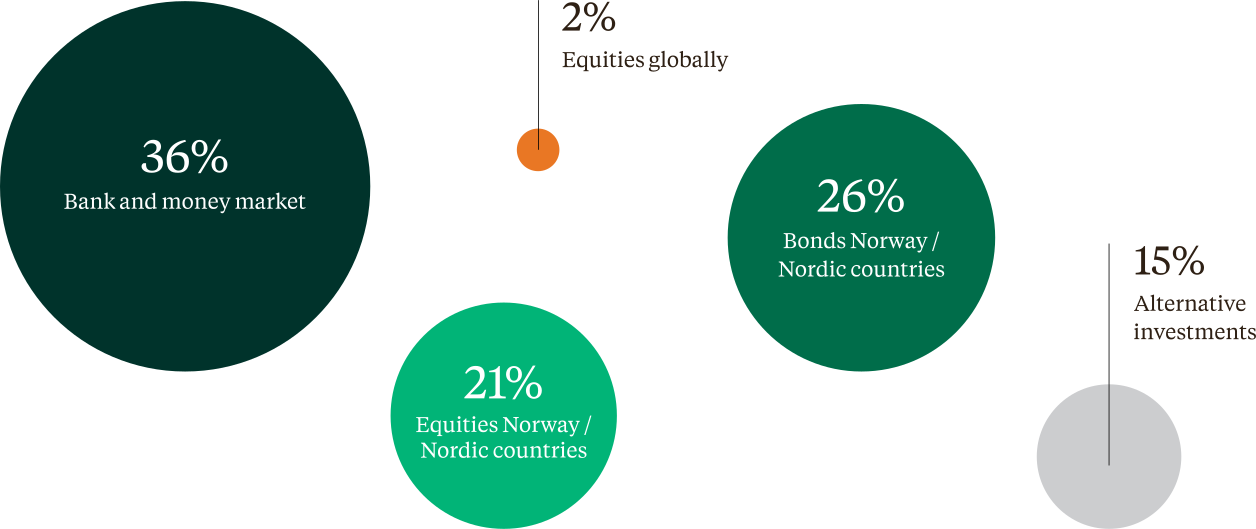
Investments by asset class as at 31 December 2025.
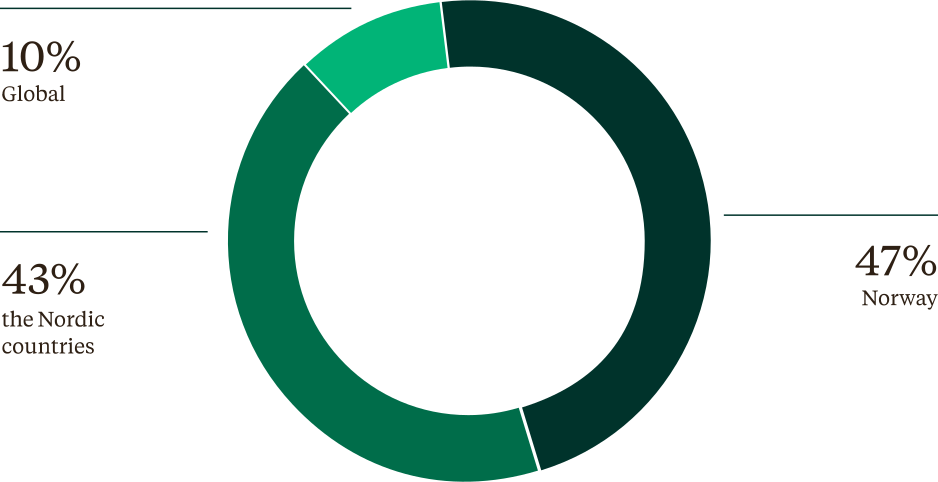
Geographical exposure, total portfolio as at 31 December 2025.
Financing
Aars as a parent company has a financing facility (RCF), which can be used for acquisitions or other investments that may require short-term financing. The financing facility is NOK 2 billion with a three-year term.
Asset Management
Asset Management in Aars has grown year by year. Over the past three years, the Asset Management team at Aars has delivered a total return exceeding NOK 1 billion. At the end of 2025, it constituted approximately 25 per cent of the company’s value-adjusted equity. It thus plays an increasingly important role in the diversification of the ownership’s assets. The portfolios must allow for rapid reallocation to mitigate overall risk or seize interesting opportunities in the capital markets, both in the short and long term. To fulfil this function, it is a fundamental requirement that the financial investments are liquid.
The portfolio is organised into three sub-portfolios, all of which are subject to strict liquidity requirements and have different functions:
- Liquidity portfolio
- Global risk portfolio
- Nordic equity portfolio
A liquidity portfolio consisting of bank deposits, money market placements and bonds with low credit risk and low/medium interest rate risk. A global risk portfolio with a broad mandate and a moderate risk level over time, though the actual risk can vary significantly from period to period. The portfolio has frameworks that allow for breadth in both asset classes and geography. The objective is a high risk-adjusted return. A Nordic equity portfolio consisting of large, publicly listed companies with strong positions in their respective markets globally, high stable margins and low leverage.
The team conduct ongoing ESG assessments of the company, manager and financial product when investing in capital markets. Aars aims for our investments in fund units or other financial instruments to comply with Article 8 of the Sustainable Finance Disclosure Regulation (SFDR).
Investments in venture funds
Asset Management is also responsible for the follow-up of existing investments in venture funds, such as StartUpLab with Founders Fund, Antler and Norselab. There have been no new fund investments here in 2025, and there are no plans to increase allocation to early-stage investments.