About mergers, emotions, and the big elephant
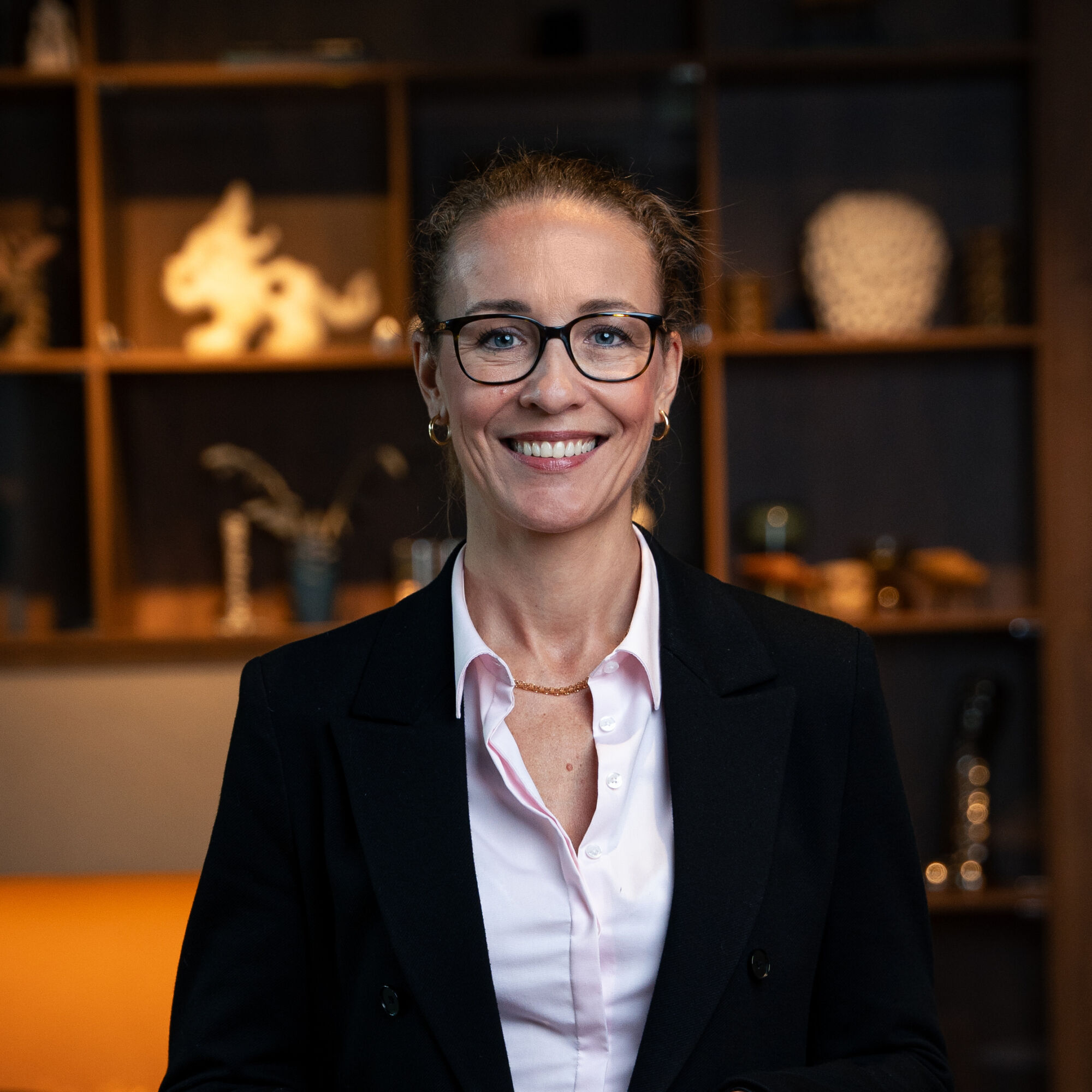
A little about Malin
Name
Malin Yrwing (46)
Works as
CEO of Onitio
Family
Partner and two children, soon to be seven and nine years old.
Where
From Stockholm, moved to Norway to study economics – and has stayed
Malin Yrwing spent a year merging two Norwegian and two Swedish companies into a large Nordic IT group. She now shares what was crucial in getting 1,500 employees across 180 locations to work together toward what is today Onitio.
“Communication. There can never be too much communication in a merger process. When major changes happen at a workplace, everyone feels they aren’t getting enough information. I thought we had allocated enough time to inform everyone involved along the way, but in hindsight, we could have spent ten times more,” says Malin Yrwing, CEO of the Nordic IT group Onitio.
In the fall of 2022, she began planning the merger of the Aars-owned IT company InfoCare with three Visma companies: Exso, Value Retail Consulting, and Esscom. Four very different companies with over 1,500 employees across more than 180 locations in Norway, Sweden, Finland, and Denmark were to become one. This marked the start of several intense months.
Just over a year later, in December 2023, Yrwing completed the process, creating what is today Onitio, a Nordic IT group that generated NOK 1.9 billion in revenue in 2023. Here, she shares the key lessons from the merger process.
A strong number two
It wasn’t a given that Swedish Yrwing would end up as the CEO of a Nordic IT group headquartered in Oslo. At 19, she traveled alone as a backpacker to Australia, New Zealand, Thailand, and France. The following year, she moved from Stockholm to Sandvika and began studying business administration at BI Norwegian Business School. Since then, Yrwing has worked in ship service, construction, and management consulting.
“I’ve always been a strong number two. As a consultant, the goal is to make the client successful. So when Aars asked if I wanted to become the CEO of their IT company InfoCare, I was very surprised. Could I go from being a strong number two to a strong number one? I concluded that if Aars believed in me, I should take the chance. I like challenges and being thrown into the deep end,” she says.
“I am very grateful for the trust. Today I see that being a leader is also about making others succeed, helping the people around me flourish,” she adds.
Large cultural differences
Shortly after starting at InfoCare - a Nordic company providing installation, support, and maintenance of IT equipment to grocery and public sectors across the Nordics - Yrwing was tasked with merging it with three other IT companies.
“The background was that Aars had acquired the Swedish and Norwegian parts of Visma’s Cloud Infrastructure Services division, which essentially consisted of three companies. Around 500 employees joined our roughly 1,000 existing staff - four organizations with very different cultures,” Yrwing explains.
“We knew the process would involve a culture clash. That’s why we conducted culture workshops at the start in all four organizations to map similarities and differences.”
“What was the result?”
“Surprisingly, many things were similar, but there were also major differences. The companies had different operational systems, financial solutions, employee benefits, and ways of working - all of which shape workplace culture. Take IT systems, for example: I would have thought functionality and costs would matter most when choosing a new, common system. I was wrong! IT system decisions evoke very strong feelings,” she laughs.
Additionally, work styles differed. Some employees travel frequently, installing and fixing hardware for clients, while others work primarily in the office with software. These nuances create different cultures, which are often hard to define, and required careful measures to strengthen or adjust.
Brakes and blossoms
“How did you manage the differences?”
“Information. Lots of it, all the time. We found that the best way to reduce cultural differences is through communication, so everyone understands why we make the decisions we do,” she says.
“Another insight was realizing how much impact individuals can have in large organizations. Some act as brakes, others blossom - and this surprised me.”
“How so?”
“It’s not always the most experienced employees who contribute most to success. Some experienced staff became very protectionist. At the same time, others surprised us positively. They were less self-centered and took responsibility for helping us reach our common goal. It was incredibly rewarding to see. In such a process, we discovered talents whose potential we might not have otherwise noticed,” Yrwing says.
The elephant and Petter Stordalen
“Besides communication, what else is needed to succeed in a large merger?”
“Pragmatism is crucial. There is no perfect solution or single correct path. As a leader, you must be pragmatic about the solutions proposed. A merger this size is basically about breaking down a giant elephant into manageable pieces. It requires careful planning and delegating many tasks,” Yrwing explains.
“As a leader, you are very visible in such a process. What feedback have you received from your colleagues?”
“Leaders rarely get feedback, so I requested a 360-degree evaluation from the employees I worked most closely with during the process. I asked them for honest feedback on what I could improve and what my strengths are.”
“And what did they say?”
“We’ve been through a process where alignment was crucial. I spent a lot of time on process and inclusion. One area for improvement is making decisions faster. I could also delegate more. I’ve been very hands-on throughout this process, and delegating tasks is partly a matter of not having enough top leadership experience,” she says.
“And your strengths?”
“I am a clear but friendly leader. I am accessible and supportive, and I want the people around me to do well. I am analytical, pragmatic, and rational - rarely emotional. People know exactly where they stand with me. Personally, I sometimes wish I were more like Petter Stordalen, so I could surprise everyone by rappelling from the roof or something like that,” she laughs.
Doubling the company
On December 1, 2023, the merger was complete. The newly combined company was named Onitio, with a new leadership team in place.
“After such an intense process, it’s natural to feel a bit of a dip. But we don’t have time for that!”
Yrwing has launched a new strategy process, which is nearly complete.
“We need to mobilize new energy to reach the ambitious goals we have set. There is a lot to achieve in 2024 and 2025, and we need to accelerate and brake at the same time.”
“Where will Onitio be in five to six years?”
“By then, we will have made the third division, Onitio Solutions, even stronger and more robust. This will also strengthen the other two divisions, Technology Services and Workforce Services & Consulting. And we will have doubled revenue - from 1.9 to nearly 4 billion NOK,” she says, adding:
“It’s a very ambitious target, but as Petter Stordalen says, ‘Every Monday is a new start.’ We need bold goals to strive for. I enjoy both deep waters and ambitious targets, so I’m confident we’ll succeed.”
Q&A
What do you do when you’re not at work?
I just finished building a cabin in the mountains. I ski on weekends. Everyday logistics definitely come first (and perhaps unfortunately so).
Something you’re good at that most people don’t know?
I’m handy. I’ve renovated five homes and a cabin, and even helped build a cabin from scratch. I own four drills and two industrial vacuum cleaners.
I love change, which is probably why I enjoy renovation projects so much. If I had more time, I’d tile the bathroom myself. My next plan is to build a house in the garden. The project is approved, but it will have to wait until I have more time.
Guilty pleasure?
Double nougat. It’s a Swedish chocolate that I’m very glad isn’t sold in Norway.
What annoys you?
At work: People who need to show off and don’t contribute as a team.
Privately: People who complain. I really appreciate those who are solution-oriented. Complaining and whining aren’t for me.
What makes you happy?
At work: Seeing colleagues achieve things that were unexpected, often against the odds.
Privately: My children. It’s fun to see how they observe life so unfiltered.
Your best tip?
Get the shit done! If I were to give advice to someone building a career, it would be this: be the person your leaders can rely on, who takes responsibility and sees things through to the end-on time. Bring solutions, not problems, when facing challenges along the way.